Valvular bronchial blockade; Bleeding from tuberculous pulmonary cavities.
A 57-year-old male patient. In 2013, he received treatment for pulmonary tuberculosis. Several months ago, he developed hemoptysis with episodes of pulmonary hemorrhage. The patient has been on continuous hemostatic therapy, during which intolerance and coagulopathy have developed.
He has currently been re-enrolled in an anti-tuberculosis treatment program, as he remains a bacterial excretor. The patient was evaluated by thoracic surgeons, who deemed surgical intervention inappropriate due to the high risk of complications and potential mortality.
A decision was made to perform bronchial blockade as the only feasible treatment option.
Under general anesthesia, using a rigid bronchoscope, a MEDLUNG No. 12 valve was placed in the left upper lobe bronchus.
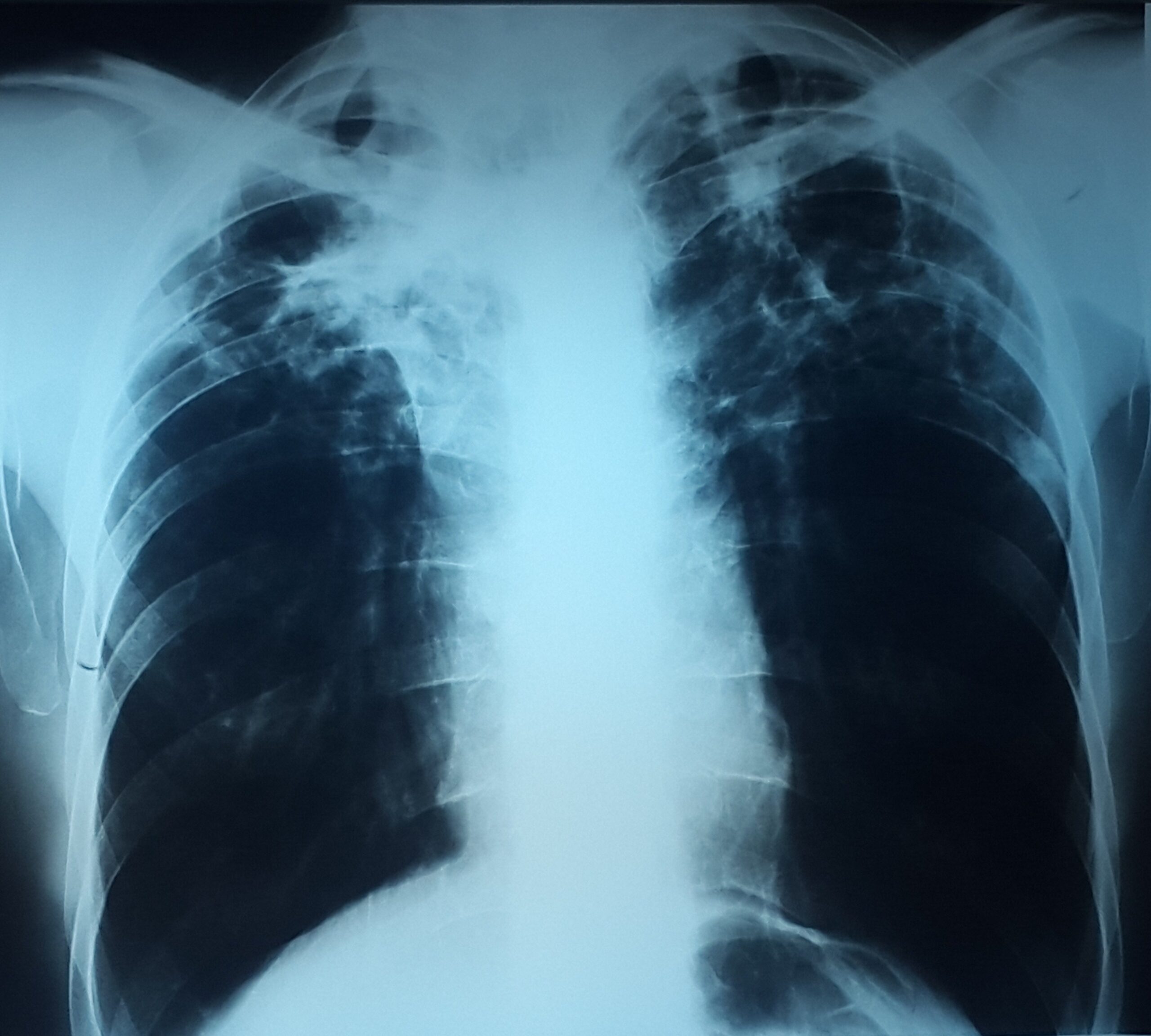
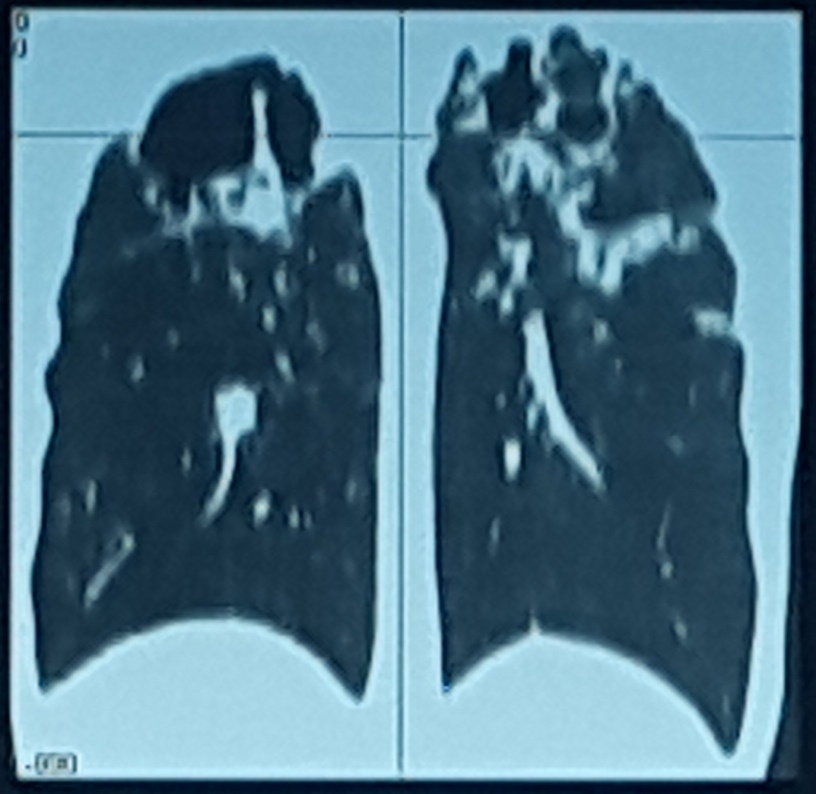
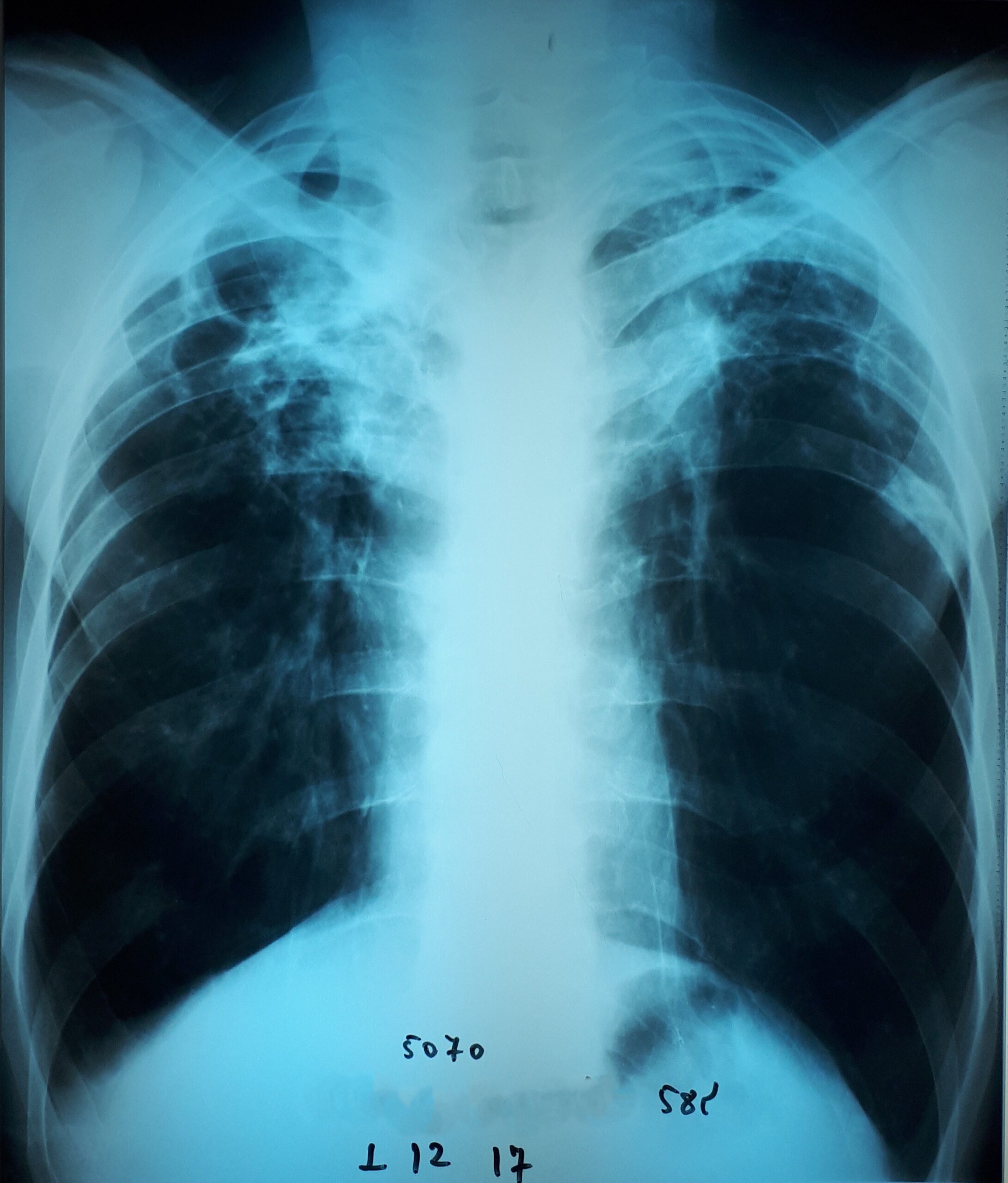
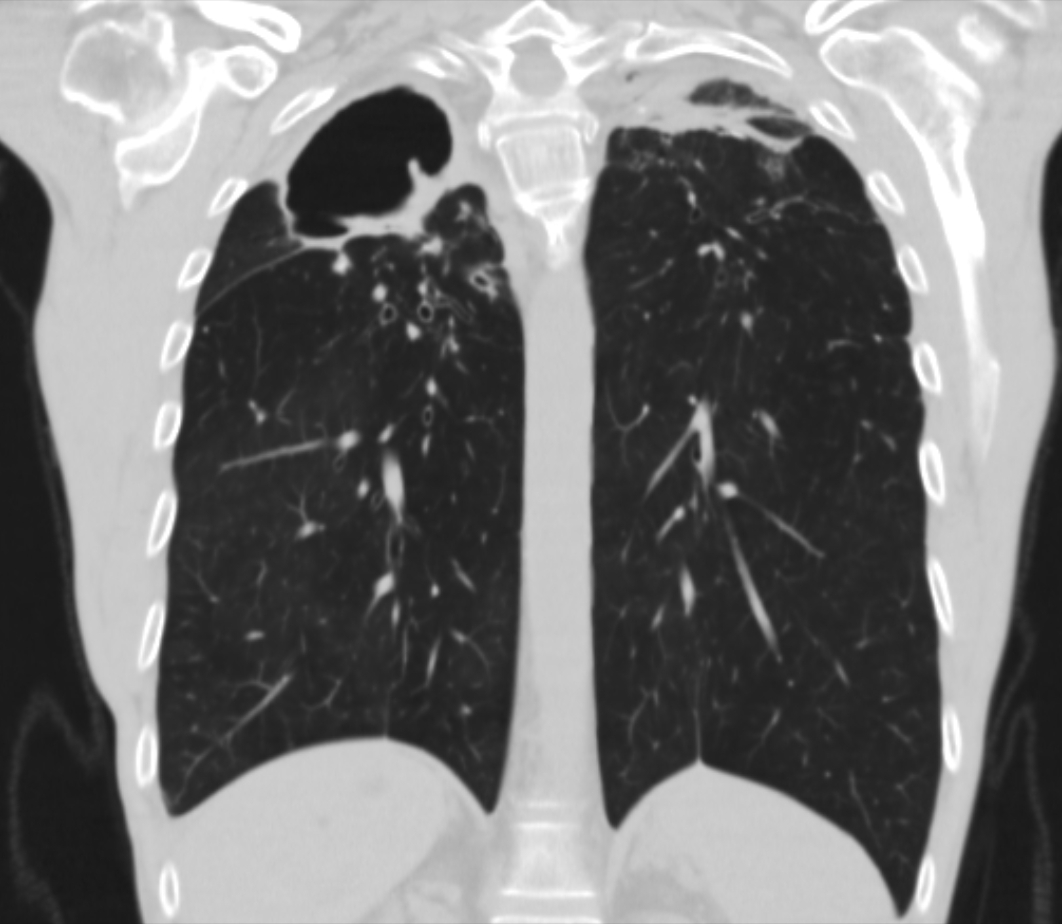
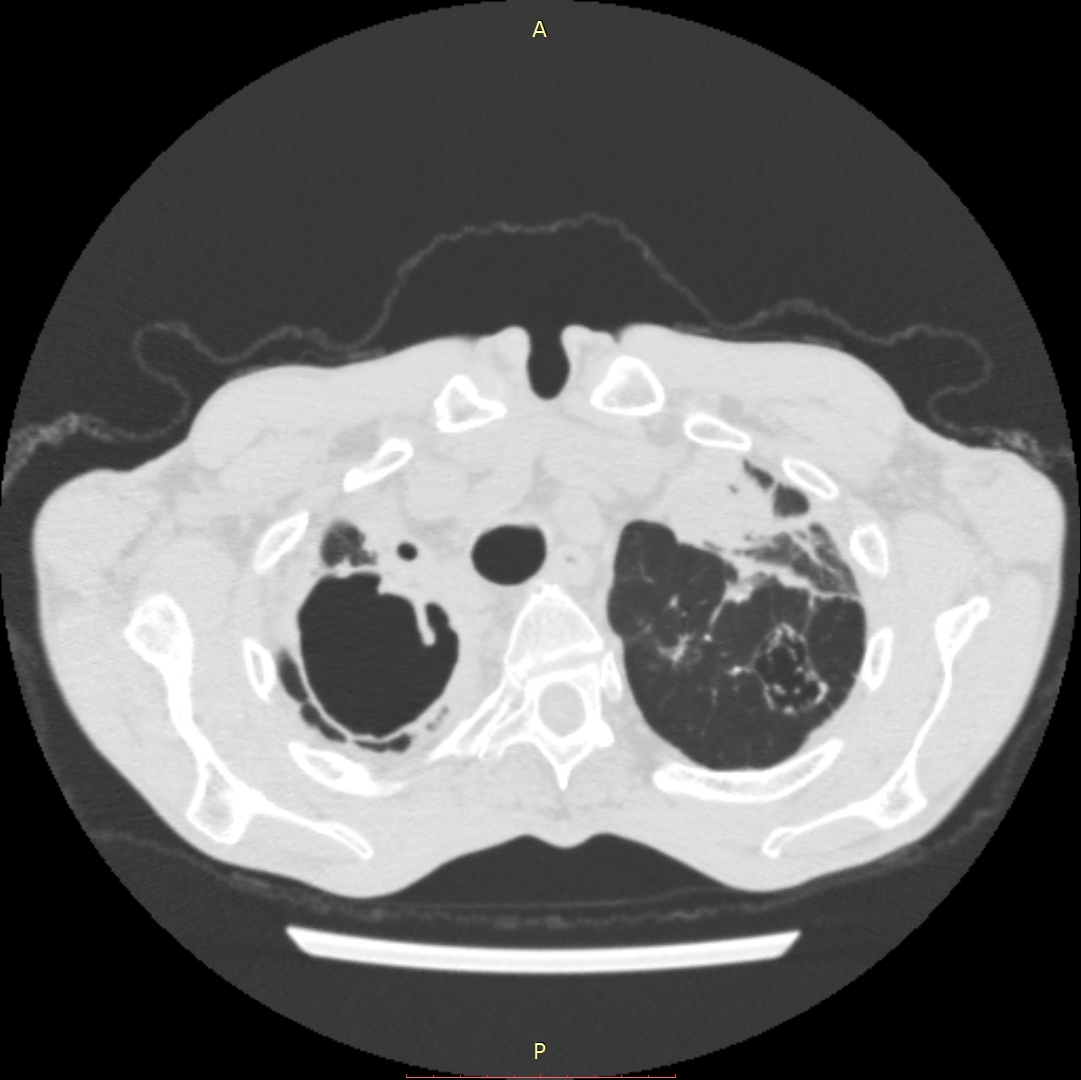
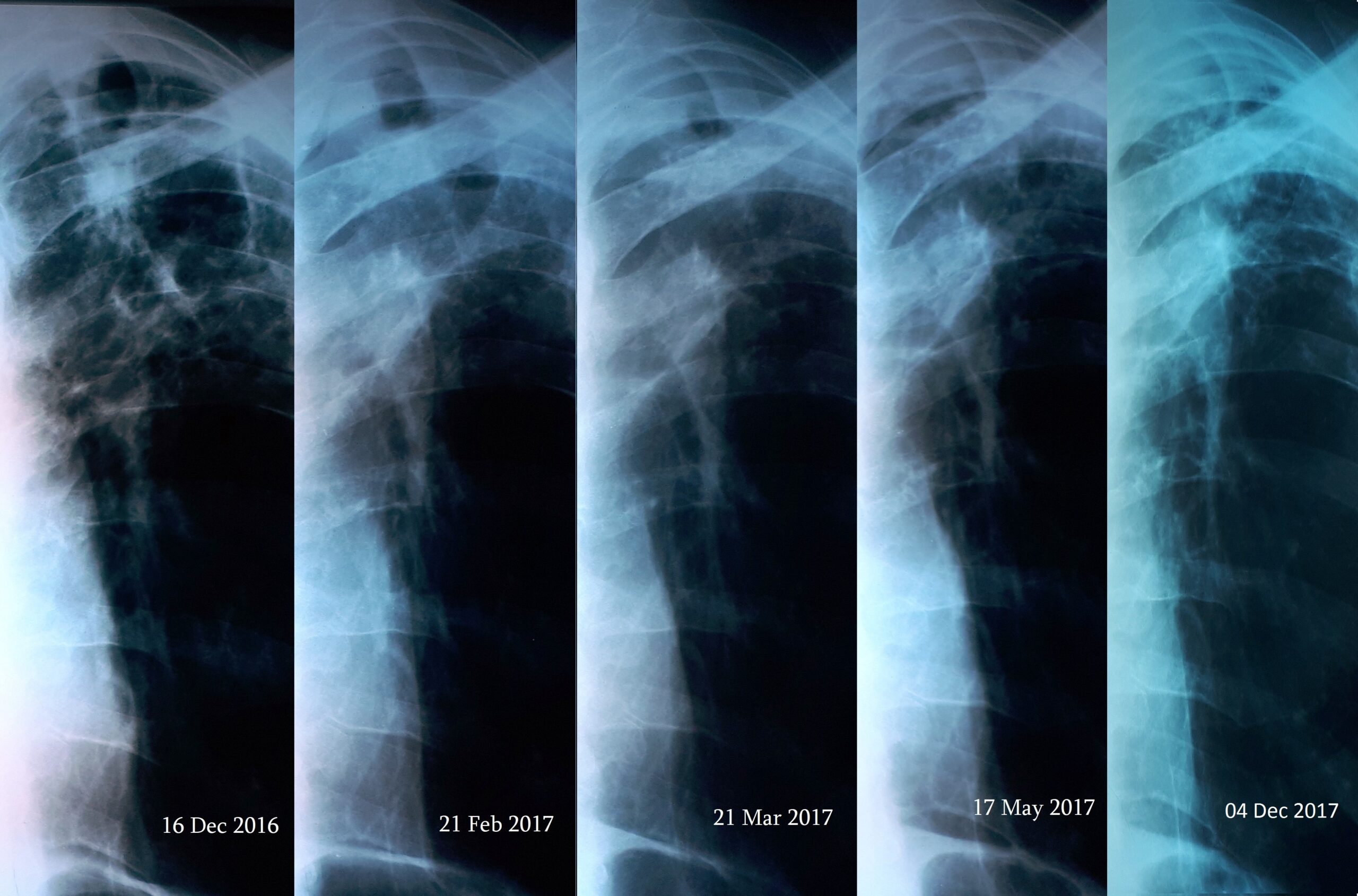
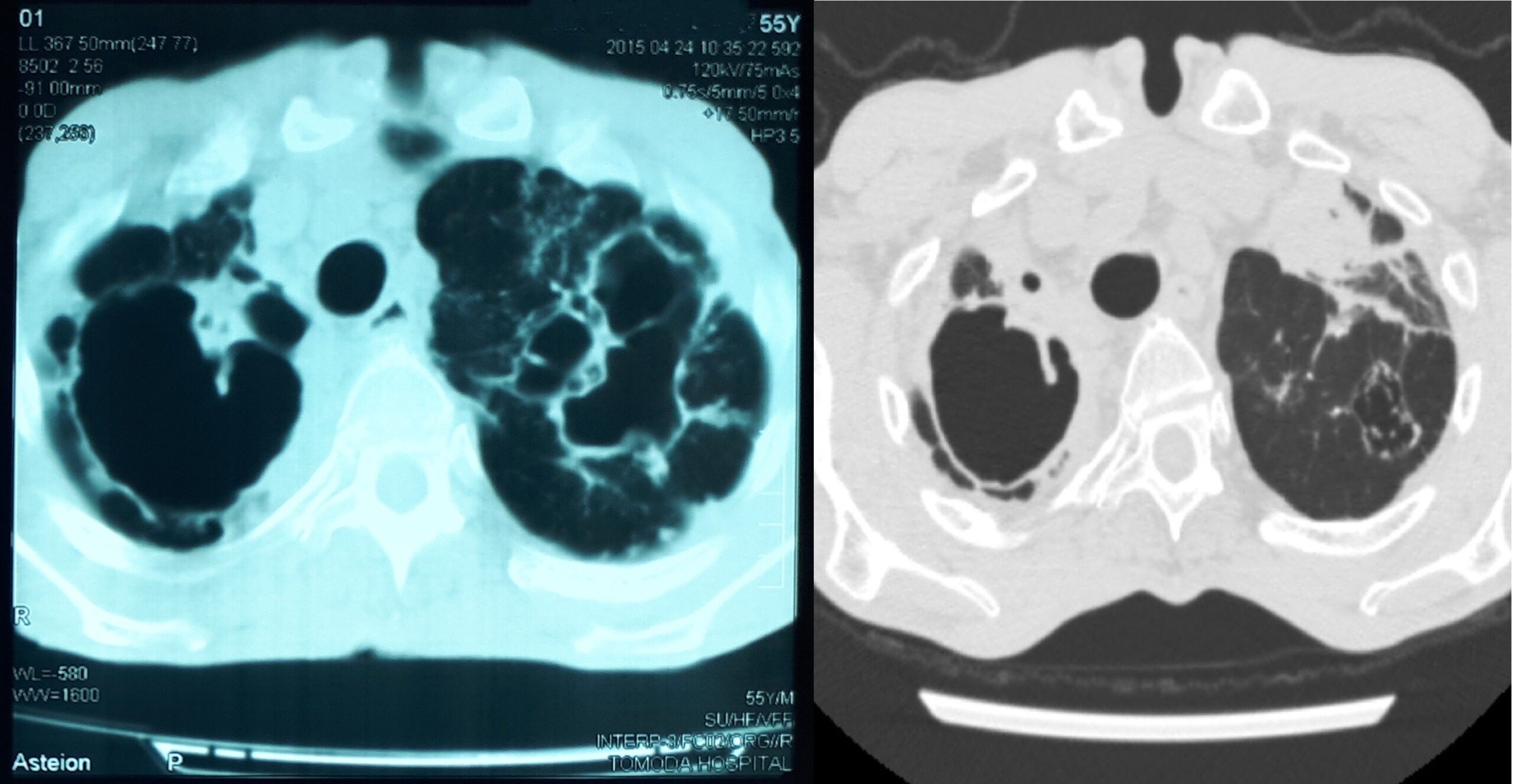
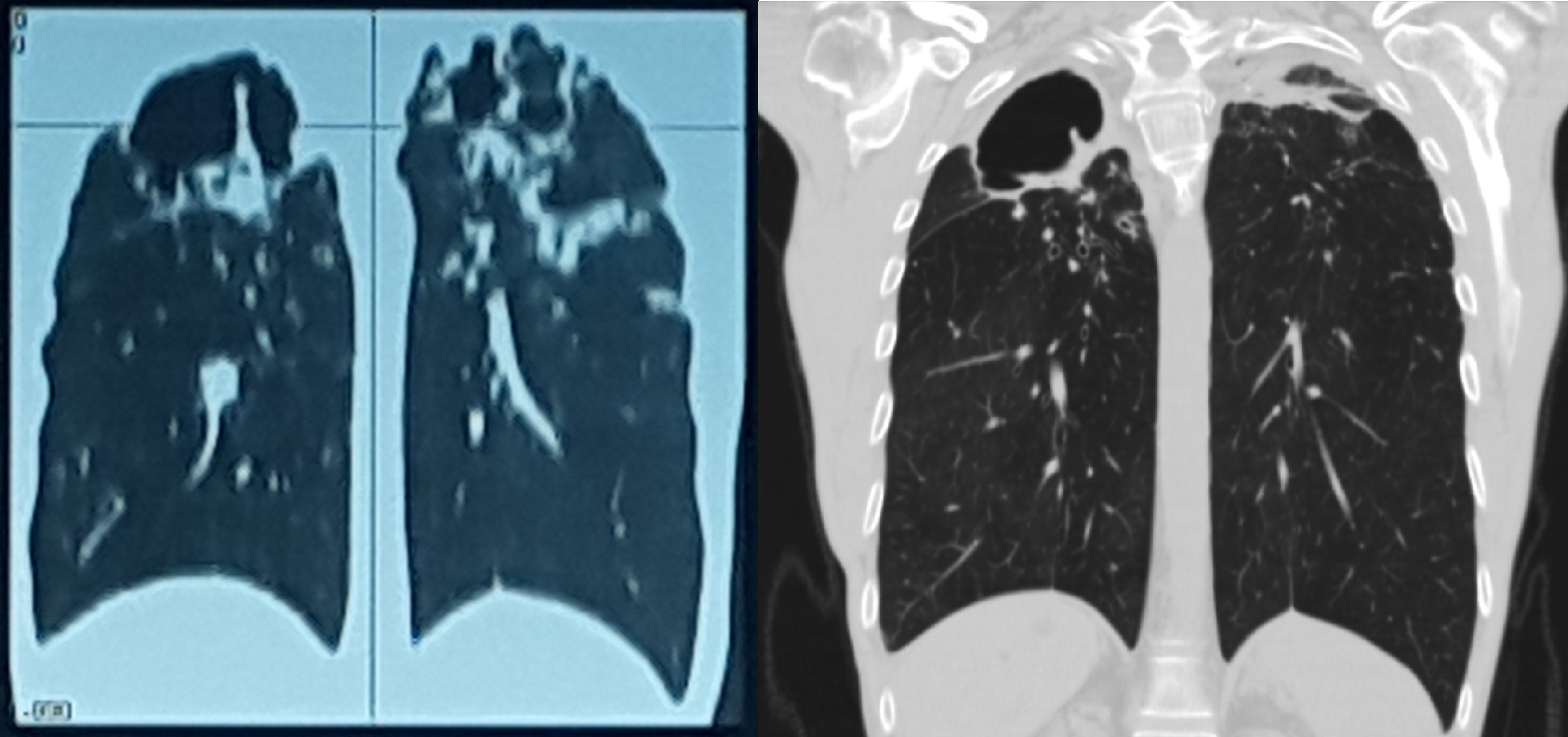
Two days after the procedure, radiological evaluation demonstrated a significant reduction in cavitary lesions and the development of atelectatic changes in the left upper lobe, confirming the collapse-therapeutic effect of the valve.
- Chest radiography 3 months prior to bronchial blockade.
- Chest CT (coronal view) prior to bronchial blockade.
- Valvular bronchial blockade.
- Chest radiography 10 months after bronchial blockade.
- Chest CT (coronal view) 10 months after bronchial blockade.
- Chest CT (axial view) 10 months after bronchial blockade.
- Radiographic comparison.
- Comparison of chest CT (axial view).
- Comparison of chest CT (coronal view).